RAINFALL CONCERNS FARMERS OF HARYANA & PUNJAB
Uneven Rainfall Brings Challenges for Paddy Farmers in Punjab & Haryana
Date: 18 Aug 2025
Introduction
This year’s monsoon has been far from uniform across the paddy belts of Punjab and Haryana. While some regions witnessed excess showers, others have been left worrying about rainfall deficits. Such uneven distribution is creating mixed fortunes for farmers, millers, and traders.
---
The Rainfall Reality
According to official data, Punjab recorded a modest 4% deficit overall, but the district-wise picture tells a very different story:
Deficit Zones – Sangrur (–36%), Muktsar (–32%), Bathinda (–20%)
Surplus Zones – Tarn Taran (+82% above average)
In Haryana, the overall picture shows a 13% surplus, yet Ambala, Jind, Kaithal, and Karnal struggled with less rain, while Kurukshetra and Hisar reported excess.
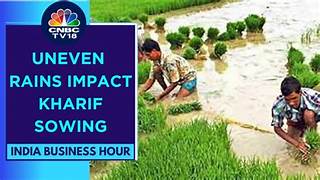
Meanwhile, Punjab’s paddy transplantation area has surged to an all-time high of 32.46 lakh hectares, highlighting farmers’ determination despite unpredictable weather.
---
Impact on Paddy Farming
Water Deficit Areas: Reduced rainfall may affect seed germination and plant growth, raising irrigation costs.
Excess Rainfall Areas: Risk of waterlogging, pest attacks, and uneven crop maturity.
Market Outlook: Supply variations between districts may lead to localized price swings.
---
Why This Matters for Rice Route Users
Farmers & Sellers – Those in deficit areas must prepare for irrigation support, while those in surplus zones need to protect against waterlogging.
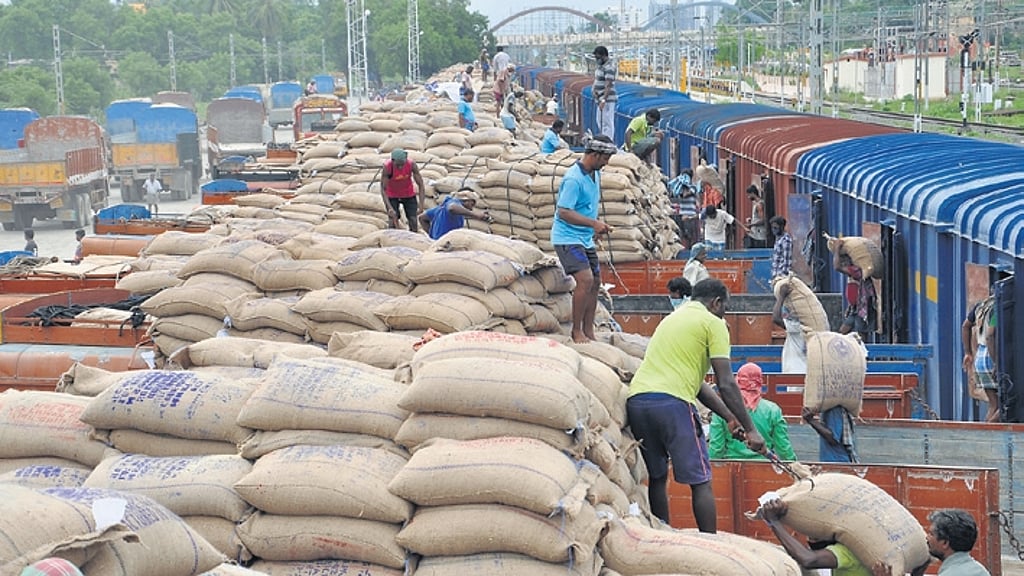
Millers & Buyers – Expect variations in quality and quantity depending on the region.
Transporters – Regional demand for water pumps, fertilizers, and crop inputs may increase transportation needs.